



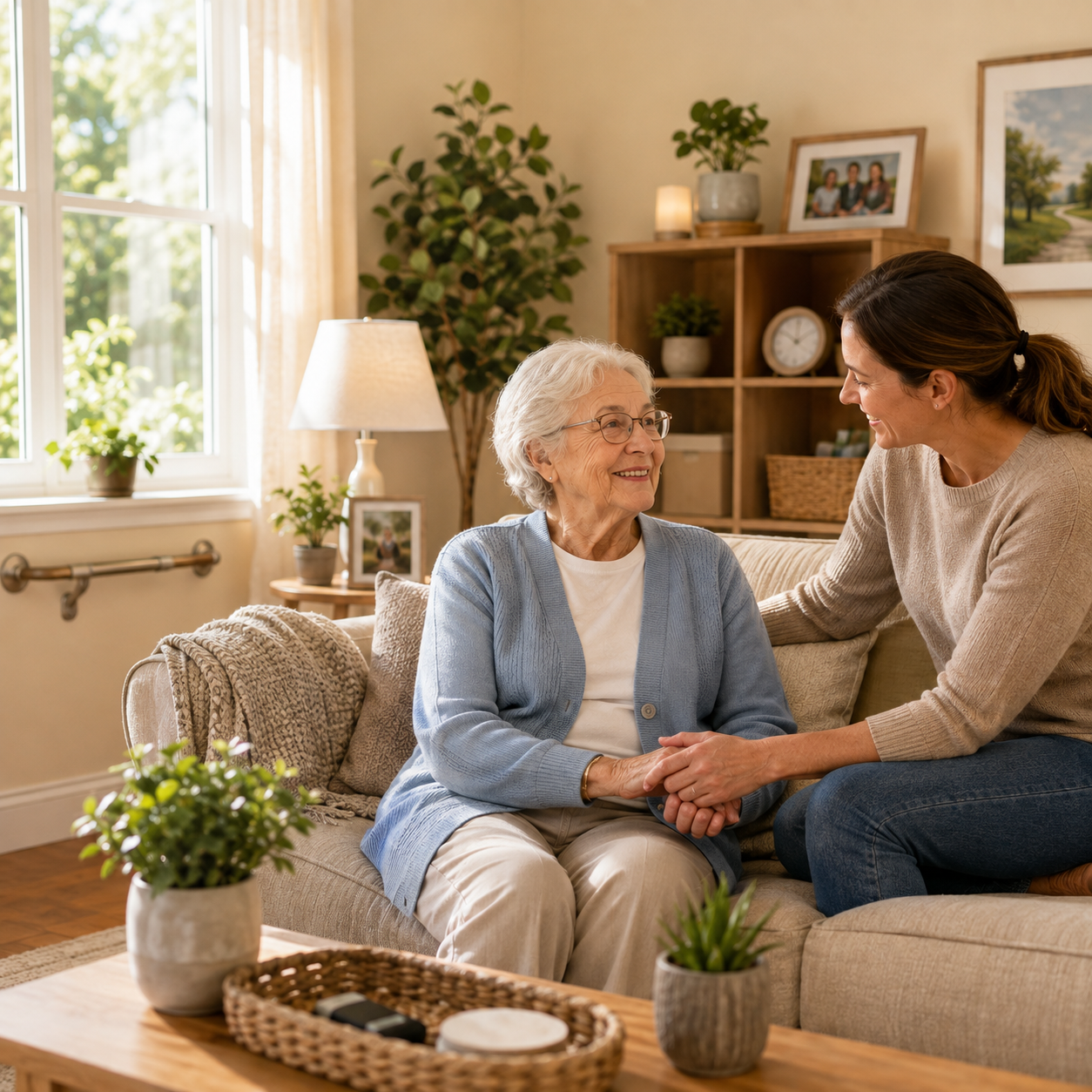
Caring for a loved one with dementia often means looking at their home in a completely different way.
A loose rug that never caused a problem before may suddenly become a fall risk. A familiar kitchen can become confusing. Even something as simple as finding the bathroom at night can become difficult.
The goal isn’t to turn the home into a hospital or remove every bit of independence. It’s to make everyday life safer, simpler, and more comfortable while allowing your loved one to do as much as they safely can.
Here are some practical ways families can create a safer home for someone living with dementia.
Start With a Walk Through the Home
One of the easiest places to begin is simply walking through the home and looking at each room from your loved one’s point of view.
Ask yourself:
- Is there anything they could trip over?
- Are frequently used items easy to find?
- Is the lighting bright enough?
- Could they accidentally turn on an appliance?
- Are medications stored safely?
- Is it easy to identify important rooms?
- Could they leave the house without anyone noticing?
Dementia can affect memory, judgment, balance, perception, and the ability to recognize potential dangers. A home that has been familiar for decades may gradually become harder to navigate.
Small changes can make a meaningful difference.
Reduce the Risk of Falls
Falls are a major concern for older adults, and changes associated with dementia can make navigating the home even more challenging.
Keep walking areas as clear as possible. Remove clutter, electrical cords, and unnecessary furniture from frequently used pathways.
Loose rugs may need to be removed or secured, particularly in hallways, bedrooms, and bathrooms.
Make sure stairways have sturdy handrails and are well lit. Bathrooms may also benefit from grab bars near the toilet and shower or bathtub.
Encourage supportive, non-slip footwear rather than walking around in loose slippers or socks.
Improve Lighting Throughout the Home
Good lighting can make the home easier to navigate and may reduce confusion.
Keep hallways, stairs, entrances, bathrooms, and frequently used rooms well lit. Nightlights can be especially helpful between the bedroom and bathroom.
Try to reduce heavy shadows when possible. Someone with dementia may misinterpret shadows, reflections, or dark areas, which can sometimes cause hesitation or distress.
During the day, opening curtains or blinds can provide natural light and help maintain a clearer distinction between daytime and nighttime.
Make the Bathroom Safer
Bathrooms deserve extra attention because wet and slippery surfaces can increase the risk of falls.
Consider adding:
- Grab bars near the toilet and bathing area
- Non-slip surfaces in the shower or bathtub
- A shower chair when appropriate
- Easy-to-use faucets
- Good lighting
- Clearly visible towels and toiletries
If your loved one has trouble finding the bathroom, a simple sign or picture on the door may help.
It’s also worth checking the water temperature. Setting the home’s hot-water system to a safer temperature can reduce the risk of accidental burns.
Pay Extra Attention to the Kitchen
The kitchen contains many potential hazards, including knives, appliances, hot surfaces, cleaning products, and medications.
Depending on your loved one’s abilities, you may need to limit access to certain items.
Sharp objects, matches, household chemicals, and other potentially dangerous products can be stored securely. If using the stove has become unsafe, consider appropriate safety measures to prevent it from being turned on unattended.
At the same time, keep commonly used and safe items easy to see and reach.
The amount of supervision needed will be different for every person and may change as dementia progresses.
Store Medications Safely
Managing medication can become difficult when someone experiences memory changes.
A person may forget to take a medication, take it twice, or become confused about which medication they need.
Keep medications organized and, when necessary, stored securely. A family member, caregiver, pharmacist, or healthcare professional may be able to help establish a safer medication routine.
If you’re concerned that your loved one is no longer managing medications safely, speak with their healthcare provider or pharmacist rather than trying to make medication changes yourself.
Make Important Things Easy to Recognize
Dementia can make it harder to remember where things are or understand the purpose of certain spaces.
Simple visual cues may help.
You could place a clear sign or picture on the bathroom door, label drawers containing everyday items, or keep frequently used belongings in the same location.
A large, easy-to-read clock and calendar can also help some people stay oriented to the day and time.
Try not to overdo the labels, though. Too many signs and instructions can become another source of confusion.
Keep things simple.
Create a Calm, Familiar Environment
Familiarity can be reassuring for someone with dementia.
Whenever possible, surround your loved one with things they recognize: family photographs, a favorite chair, familiar blankets, meaningful decorations, or music they enjoy.
Avoid making too many changes at once.
Completely rearranging furniture or redecorating an entire room may make a familiar space suddenly feel unfamiliar.
A calm environment with predictable routines can often be easier to manage than one with constant noise, clutter, or activity.
Think About Wandering and Leaving the Home
Some people living with dementia may wander or leave home unexpectedly.
If this is happening, families may need to take additional precautions.
Door alerts, motion sensors, or other safety systems can help caregivers know when someone is attempting to leave. Keep car keys and other items that could create a safety risk in an appropriate location.
Identification information may also be useful in case your loved one becomes lost.
Avoid locking someone into a situation where they couldn’t escape during a fire or another emergency. Safety measures should always take emergency access into account.
If wandering is becoming frequent, discuss it with your loved one’s healthcare provider and care team.
Don’t Forget Fire and Emergency Safety
Make sure smoke and carbon monoxide alarms are working and tested regularly.
Keep emergency numbers and important information somewhere accessible to family members and caregivers.
It can also help to have a plan for emergencies. Family members should know who to contact, where important medications and documents are located, and how your loved one will be assisted if the home needs to be evacuated.
Adjust Safety Measures as Needs Change
A home that is safe today may need additional changes several months from now.
Dementia is often progressive, and abilities can change over time. Someone who currently prepares breakfast independently, for example, may eventually need supervision in the kitchen.
Pay attention to new difficulties rather than waiting for an accident to happen.
Regularly reassess your loved one’s mobility, judgment, daily routines, and ability to use household items safely.
Remember the Family Caregiver’s Safety, Too
Creating a safe home isn’t only about the person with dementia.
Family caregivers may become exhausted when they’re constantly watching, helping, redirecting, and worrying about what could happen next.
Trying to provide supervision around the clock while also working, raising a family, running errands, and managing your own responsibilities can quickly become overwhelming.
Having someone trustworthy step in for even a few hours can give you time to work, attend appointments, rest, or simply leave the house knowing your loved one isn’t alone.
Asking for support doesn’t mean you’re doing less for your loved one. It can help make caregiving more sustainable.
A Safer Home Can Still Feel Like Home
Dementia changes many things, but home can remain a place of familiarity, comfort, and connection.
You don’t need to change everything overnight. Start with the biggest safety concerns, make small adjustments, and continue adapting the environment as your loved one’s needs change.
And remember that you don’t have to manage every part of caregiving by yourself.
For families in Greater Toronto and York Region, Caregiving Zen can provide in-home support based on your family’s needs—whether that’s a few hours of assistance or more regular care.
If you’re unsure where to begin, you can start with a free Care Discovery Call. It’s simply a chance to talk about what’s happening at home, ask questions, and explore what kind of support might help your loved one—and you.
Because creating a safe home isn’t just about preventing accidents. It’s about helping your loved one feel comfortable, supported, and cared for in the place they know best.